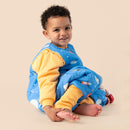
Eczema is common in babies and young children and can leave their skin feeling dry, itchy and uncomfortable. For parents, it can be particularly difficult when eczema becomes more troublesome at night and your little one just wants to scratch.
While eczema can have many different triggers, there are some simple things you can do to help keep your baby comfortable, particularly when it comes to clothing, temperature and bedtime.
What Does Baby Eczema Look Like?
Atopic eczema, also known as atopic dermatitis, is a common skin condition that causes the skin to become dry, itchy, cracked and sore.
In babies, eczema can appear on different areas of the body, including the face. It can also appear in the creases of the neck, elbows and backs of the knees, as well as on the hands.
The appearance of eczema can vary depending on skin tone. On white skin, affected areas may look red, while on black or brown skin they may appear dark brown, purple or grey.
Eczema can vary considerably from one child to another. Some babies may have small patches of dry skin, while others experience more widespread or uncomfortable flare-ups.
You can find more information about the symptoms, causes and treatment of eczema in babies and children on the HSE website.
If you're concerned about your baby's skin or think they may have eczema, contact your GP for advice.
What Can Trigger Eczema in Babies?
There isn't always an obvious reason for an eczema flare-up, and triggers can be different for every child.
Some things that may cause eczema to flare up include:
-
Heat or changes in temperature
-
Soaps and washing detergents
-
Certain fabrics
-
Allergens such as pollen, pets or house dust mites
-
Skin infections
-
Teething
-
Some viruses
-
Stress
It can be helpful to notice when your baby's eczema becomes worse and whether there is a pattern. However, eczema is a medical condition and you shouldn't feel you need to identify or eliminate every possible trigger yourself.
If you suspect that food is affecting your child's eczema, speak to your GP rather than removing foods or food groups from their diet without medical advice.
Why Can Baby Eczema Be Worse at Night?
Itching can be particularly troublesome at night and may disturb your baby's sleep.
Becoming too warm may also aggravate eczema for some children, making the temperature of their bedroom and what they wear to bed particularly important.
Keeping your baby's fingernails short can help reduce the damage caused by scratching. Always follow the treatment and skincare advice given by your GP or healthcare professional too.
Can Heat Make Baby Eczema Worse?
Heat and changes in temperature can trigger eczema flare-ups in some babies and children, so it's important to avoid letting your little one become too warm.
At bedtime, dress your baby according to the temperature of their room rather than the season outside.
A baby sleeping bag can make this easier because its TOG rating helps you choose an appropriate level of warmth for the room temperature without using loose bedding.
At Slumbersac, our baby sleeping bags are available in different TOG ratings:
-
0.5 TOG – for warm rooms above 24°C
-
1.0 TOG – for rooms between 18–24°C
-
2.5 TOG – for rooms between 15–21°C
-
3.5 TOG – for colder rooms below 18°C
These are guidelines only, as every baby is different. Check the back of your baby's neck or their chest to make sure they feel comfortably warm rather than hot or sweaty. Don't worry if their hands and feet feel cooler, as this is normal.
What Clothing Is Best for Babies with Eczema?
When your baby has eczema, it's worth paying particular attention to anything that sits directly against their skin.
The HSE recommends cool, breathable fabrics such as cotton for children with eczema.
Try to avoid clothing that feels rough or scratchy and check for seams, labels or fastenings that could rub against particularly sensitive areas.
It's also a good idea to wash new clothes before your baby wears them. The HSE recommends using a non-biological detergent and a double rinse cycle when washing the clothes or bedding of a child with eczema.
Choosing Sleepwear for a Baby with Eczema
Comfort is particularly important at night, when itching can make it harder for a baby with eczema to settle.
Look for soft, breathable sleepwear and avoid unnecessary layers that could make your baby too warm.
It's also worth looking closely at the construction of nightwear and sleeping bags. Covered zips and comfortable seams can help minimise areas that might rub against delicate skin.
Whatever your baby wears to bed, make sure it fits correctly and is appropriate for the temperature of their room.
Can a Baby Sleeping Bag Help with Eczema?
A baby sleeping bag won't treat or cure eczema. However, choosing soft, breathable sleepwear and keeping your baby at a comfortable temperature can form part of a comfortable bedtime environment for eczema-prone skin.
Slumbersac baby sleeping bags are made using carefully selected fabrics, including cotton, organic cotton and our lightweight cotton and bamboo muslin used in selected summer sleeping bags.
Our fabrics are tested and certified to OEKO-TEX® STANDARD 100, which means they have been tested for harmful substances.
Our baby sleeping bags are also designed with covered zip areas and comfortable neck and arm openings, helping to keep fastenings away from delicate skin.
Most importantly, always choose the correct size sleeping bag for your baby and an appropriate TOG for their room temperature.
How Can I Reduce Scratching at Night?
Babies don't understand that scratching can make eczema more irritated – they simply know that scratching an itch can temporarily feel better.
Keeping their nails short can help reduce damage to the skin. Depending on your baby's age and the advice you've received from your healthcare professional, suitable clothing may also help limit direct scratching of affected areas.
Keeping your baby comfortably cool can be important too, as heat can make eczema worse for some children.
If itching is regularly disturbing your baby's sleep, speak to your GP rather than relying on clothing alone to manage it.
When Should You Get Medical Advice About Baby Eczema?
Contact your GP if your child has symptoms of eczema or you're concerned about their skin.
You should also contact your GP if your child's eczema is having a flare-up that isn't getting better after two to three days of regular treatment.
The HSE advises contacting your GP if your child has oozing, crusted or broken areas of skin, or if the area around the eczema looks red or feels hot, as these can be signs that the eczema has become infected.
You should also seek medical advice if your child's symptoms are worrying you.
Helping Your Baby Stay Comfortable at Night
There's no single solution that works for every baby with eczema. You may find that it takes time to understand what makes your baby's skin more or less comfortable.
When it comes to bedtime, soft and breathable fabrics, avoiding overheating and following the eczema treatment recommended by your healthcare professional can all help create a more comfortable sleep environment.
And remember that a sleeping bag isn't a treatment for eczema. It's simply one way of keeping your baby comfortably dressed for sleep without loose bedding, while allowing you to choose a TOG suitable for their room temperature.
Frequently Asked Questions
What causes eczema in babies?
The exact cause of atopic eczema isn't always known. Babies and children may be more likely to develop it if one or both parents have eczema or if they or a close family member have asthma or hay fever.
What clothes are best for a baby with eczema?
The HSE recommends cool, breathable fabrics such as cotton for children with eczema. Avoid clothing that feels rough or scratchy and check for seams, labels or fastenings that could irritate sensitive areas.
Why is my baby's eczema worse at night?
Itching can be particularly noticeable at night and may disturb sleep. Heat can also trigger eczema flare-ups for some children, so keeping your baby comfortably dressed and avoiding overheating can help create a more comfortable sleep environment.
Can heat make baby eczema worse?
Yes, heat and changes in temperature can trigger eczema flare-ups in some babies and children. Dress your baby appropriately for their room temperature and check their chest or the back of their neck to make sure they aren't becoming too warm.
Can a sleeping bag help a baby with eczema?
A baby sleeping bag doesn't treat eczema. However, a correctly fitted sleeping bag made from soft, breathable fabric can form part of a comfortable bedtime environment and makes it easier to choose an appropriate level of warmth using its TOG rating.
Should I see a doctor about my baby's eczema?
Contact your GP if your baby has symptoms of eczema, their eczema isn't improving with treatment or you're concerned about their skin. Seek medical advice if you notice possible signs of infection such as oozing, crusting, broken skin, redness or skin that feels hot.